
Body-focused repetitive behaviors: Why do I place them on the self-harm continuum?

My definition of body-focused repetitive behaviors (BFRBs): Body-focused repetitive behaviors are repetitive over-grooming acts, on the self-harm continuum, that serve as coping mechanisms. They do damage to the dermis. They are very effective in the short term in regulating physiological and emotional states and connect to a wide array of co-morbid conditions. They include skin picking, hair pulling, and cuticle/nail/cheek biting.

One element of this definition, that BFRBs are on the self-harm continuum, has proven controversial, as many in the BFRB field separate BFRBs from other self-harm behaviors like cutting. In my view, cutting is at one end of the continuum, where pain is a more conscious element of the desired result, with perhaps an unconscious motivation to cry for help, to express inner pain in an outward manner, and the experience of relief and release are side benefits. BFRBs tend to be at the other end of the continuum, with a focus on soothing, release and relief, and with the unconscious motivation to let frustrated energy out bit by bit, and pain is usually less of the desired result and more of an unintended effect. I specifically place both disorders on the same continuum to reduce the stigma of both poles of coping strategies involving bodily harm.

In contrast, the Scientific Advisory Board of the TLC Foundation for BFRBs has put an opinion paper (notedly without any citations) on their Instagram site on the topic, separating BFRBs from other self-harm behaviors like cutting. They point out the differences between cutting and BFRBs, including that they focus more on self-soothing than pain, do not tend to be connected to borderline personality disorder, and often have no intention to harm themselves in the process of picking or pulling but rather are usually focused on self-soothing. From my perspective, this distinction focuses on the differences while ignoring the similarities between BFRBs and other versions of self-harm, in a way that stigmatizes self-harm while simplifying engagement in BFRBs.

The field of Psychodermatology, a growing field that combines psychiatry, psychology and dermatology, places hair-pulling and skin-picking on the self-harm continuum. In 2013, the European Society for Dermatology and Psychiatry added a category to their classification system called Self-Inflicted Skin Lesions (SISL). They defined SISL as, “non-suicidal, conscious and direct damage to the skin” on the self-harm continuum (Tomas-Aragones, 2017, p. 159). The self-harm element is particularly important in both understanding and treating the disorders, as it reflects the complexity of the emotional regulation capacity of BFRBs and informs the treatment process.

In my experience as a recovering skin-picker, the picking could at times be focused around correcting a perceived imperfection, releasing stress, or, at times, reflecting my inner pain outwardly, or as part of an emotional self-attack. That last element, turning anger inward, has been found to be common among pickers and pullers (Keuthen et al., 2016). Anger turned inward has to come out in some way, and attacks on the skin are one way of releasing this inner tension. If we deny the self-harming element of BFRBs, we may well miss the intensity of internalized anger fueling the behaviors. If, on the other hand, we allow for self-harm to be a possible component of the behaviors, we can address the psychosocial factors that make it hard to express anger in healthy ways.

References:

Curley, E., Tung, E. & Keuthen, N. (2016). Trait anger, anger expression, and anger control in trichotillomania: Evidence for the emotion regulation model. Journal of Obsessive-Compulsive and Related Disorders, 9, 77-81.

Tomas-Aragones, L., Consoli, SM., Console, SG., Poot, F., Taube, KM…& Geiler, U. (2017). Self-inflicted lesions in dermatology: A management and therapeutic approach – A position paper from the European Society for Dermatology and Psychiatry. Acta Dermato-Venereologica. doi: 10.2340/00015555-2522.
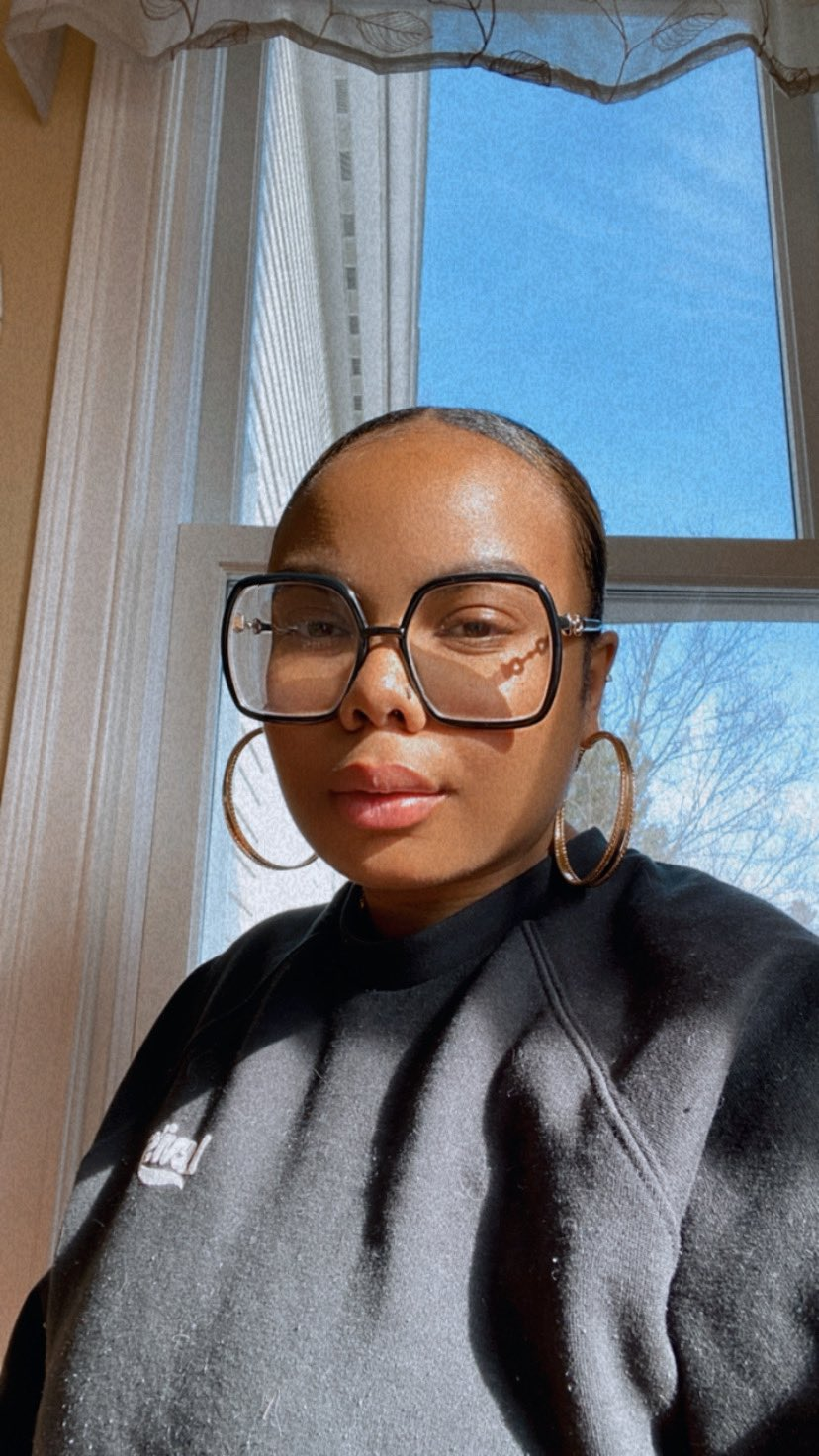
Hair and Skin from a Socio-Emotional Perspective: Guest Blog with Saharra Dixon

Hair and skin have been the focus of many idioms throughout history. As the site of human grooming, they serve as a way to express individuality or conform to social norms, and also serve as a key indicator of racial and ethic differences. As Koblenzer (1999) explains, “The symbolic use of the skin and its appendages to express unconscious ideas wishes and conflicts…has a history that is both long and broad, reaching back to the beginnings of time and encompassing many cultures,” (p. 130).

For this blog, I asked Saharra Dixon, a first-year doctoral student in the Department of Health Promotion and Policy at the University of Massachusetts Amherst, to share her thoughts about the connection between her own experience with hair pulling and the symbolism of hair, and she generously agreed.

Saharra’s reflections started with a response to the phrase, “I’m so frustrated I could pull my hair out.”

“My BFRB is trichotillomania. I used to bite my cuticles excessively when I was younger, but being able to get and maintain acrylics has helped mitigate that in my adulthood. Ironically, I don't think I have ever uttered this phrase before in my life. Hair pulling was just something I did. I never felt the need to announce it out loud to myself or others before or during the act of pulling. I wanted to draw as much attention away from it as possible. I hated getting caught in the act.

Being a Black woman with BFRBs is a very different experience. Hair and skin for African American women is a socio-emotional issue (Neal-Barnett & Stadilus, 2006). The physical properties, the act of hair preparation and emphasis placed on hair in the Black community appears to “engender, at an early age, various affective responses to African American females” (ibid, 754). A study of 43 Black women found significant correlations between aspects of a participant’s racial identity and their affect before, during, and after a hair pulling episode (Neal-Barnett & Stadilus, 2006). To fully understand BFRBs in Black women, racism and socio-cultural dynamics must be investigated. Whereas racism may not influence the symptomatology of BFRBs (that is, what characterizes the pulling and picking, what allows it to be diagnosable), it, along with socio-cultural dynamics, may influence the onset of BFRBs, as well as coping, help-seeking, and other aspects of these disorders (Neal-Barnett et al., 2000).

I pull from many sites on my body, but realized texturism played an important role in some of my pulling behavior. When I started therapy, I was able to unpack that. I realized I constantly had my hands in my hair when I wore my hair in its' natural afro state. I would try to groom myself, pick out the super kinky knots, get it "straight", pull out the coils. A lot of my therapy dealt a great deal with the acceptance of my hair texture. While pulling out my eyelashes, eyebrows, and other sites of body hair was more anxiety-related and mindless, pulling from my head had much deeper stakes. When beauty is equated to whiteness, to having long hair, small nose, loose curls or straight hair, more "manageable" hair, it can be exhausting. Sprinkle in the Black community's emphasis on hair and skin, it can be a recipe for disaster.

I enjoy being able to rock many different hair styles and try new, funky acrylics, as it also helps mitigate my hair pulling, but it can be exhausting to keep up with it. Black women constantly feel they have to look "presentable" all of the time. Hair done, nails done, eyebrows done. Where white women can get away with rocking a messy bun and sweats to run errands, Black women get judged for looking "unkempt". We're not allowed to have an off day. What is an off day? We are expected to endure so much at the intersection of racism, sexism, and care-giving, but to look good doing it. I am finally at a point where I love and embrace everything that makes me Black (with a capital B). My parents started to teach me that at a very early age (thank you, Mom and Dad). I share this because it is a journey, but once you get to the other side of the mountain, it feels so good to decolonize beauty and the way we are expected to show up in this world. Given this, it's easy to see why Black women at-large still struggle accessing mental health services. Richards (2021) suggests that stigma and prior experiences seeking mental health treatment all affect Black women’s help-seeking behaviors, explaining why Black women with

BFRBs are more likely to seek help from hair care professionals and estheticians (Neal-Barnett et al.,2000). These are usually people we know in the community, who know our hair, and have worked with numerous times over. Normalizing messages around mental health and changing the narrative for Black women who are ready to tell their story and pursue treatment is vital to shifting the help-seeking lens (Richards, 2021). Equally important, we need to promote cultural humility among current and emergent care and service providers and make space for candid conversations related to socio-cultural differences and power imbalances (Richards, 2021).”


Saharra’s bio:

Saharra Dixon was recently awarded a 2022 Emerging Scholars Fellowship with Active Minds. She feels deeply passionate about decolonizing mental health and mental health services.

Saharra Dixon is a first-year doctoral student in the Department of Health Promotion and Policy at the University of Massachusetts Amherst. She is an arts in health practitioner and health educator who uses theatre and storytelling for health promotion and health research. She believes the arts can be used as a powerful tool to promote healing and facilitate behavioral and social change, as well as further community development and catalyze public engagement and critical dialogue. Saharra will use digital storytelling as a critical narrative intervention (CNI) to explore the experiences of Black women with body-focused repetitive behaviors (BFRBs) like hair-pulling and skin picking to investigate how the intersection of racism, sexism, and socio-cultural expectations may shape their individual and collective experiences. The digital stories will be shared during a community screening to open dialogue around shifting stigmatizing conversations focused on Black women’s mental health. Learn more here: https://www.activeminds.org/programs/emerging-scholars-fellowship/

References:

Koblenzer, C. (1999). Psychoanalytic perspectives on trichotillomania. In D. Stein, G. Christenson, & Eric Hollander (Eds.), Trichotillomania. Washington, DC: American Psychiatric Press.

Neal-Barnett, A., Ward-Brown, B., Mitchell, M., & Krownapple, M.(2000). Hair pulling in African Americans—only your hairdresser knows for sure: An exploratory study. Cultural Diversity & Ethnic Minority Psychology, 6, 352-62. 10.1037/1099-9809.6.4.352.

Neal-Barnett, A., & Stadulis, R. (2006). Affective states and racial identity among African-American women with trichotillomania. Journal of the National Medical Association, 98(5), 753–757 https://www.ncbi.nlm.nih.gov/pmc/articles/PMC2569295/

Neal-Barnett, A., Statom, D., & Stadulis, R. (2011). Trichotillomania symptoms in African American women: are they related to anxiety and culture?. CNS neuroscience & therapeutics, 17(4), 207–213. https://doi.org/10.1111/j.1755-5949.2010.00138.x

Richards, Erica. (2021). The state of mental health of black women: Clinical considerations. Psychiatric Times, 38(9) https://www.psychiatrictimes.com