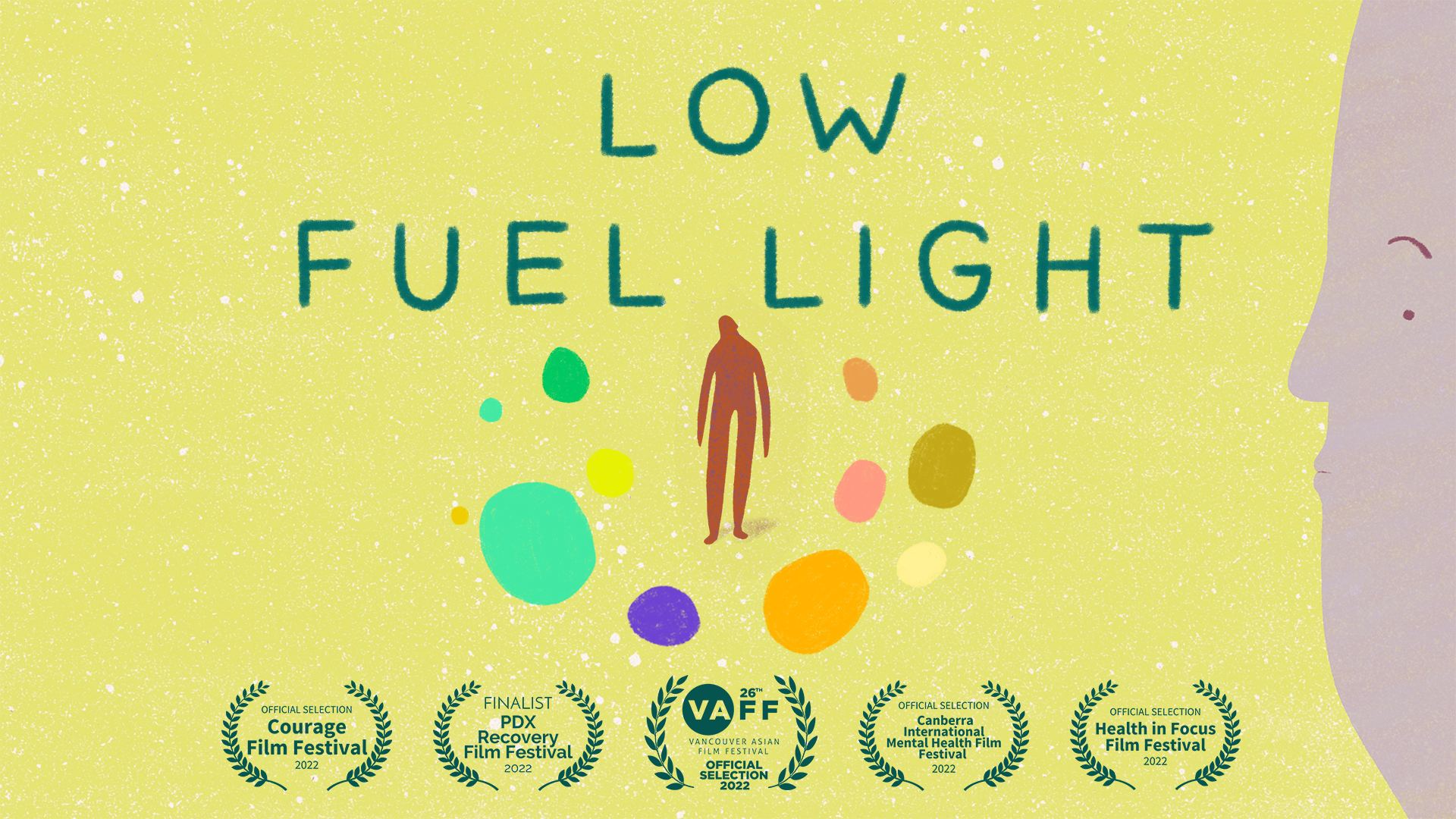
Guest blog with Jason Yu: On the Making of Low Fuel Light, A BFRB Animated Short Fil

https://youtu.be/U0oe1k_Url4

I made Low Fuel Light to mark a significant turning point in my BFRB journey, but I’ve had complicated feelings in sharing it. I’m excited to share a metaphor that’s been so useful for me, but I’m apprehensive as well. I’m worried people with BFRBs will be mad at me. “How dare you say your BFRB is your friend, I hate my BFRB!”

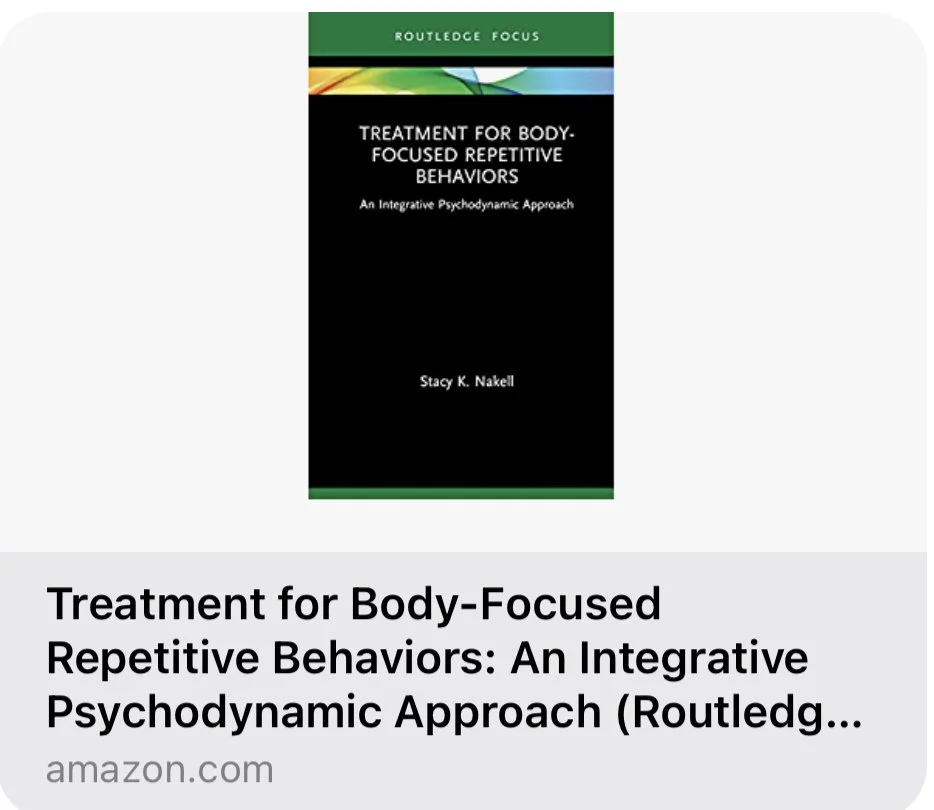
For this reason, I’m so thankful to have met Stacy this past year, as she taught me about the psychodynamic therapy approach. It’s an approach that has deeply enriched my own therapy practice and the understanding of my own compulsive skin-picking. In a world where CBT has become synonymous with therapy, I recommend everyone to do a bit of homework and learn what is out there when finding a therapist. Therapist dating is frustrating! I sought out therapy from 6 different professionals before I found the right fit for me. 

What I like about a psychodynamic approach is it seeks to understand and heal the root of the issue whereas CBT seems overly fixated on replacing the symptoms. For me, I couldn’t just “think” my way through my BFRB. I find that CBT generally treats the BFRB as the enemy to be removed, whereas, like what Stacy writes in her book, I found it useful to ask instead “what is your BFRB trying to communicate to you?”

My journey with Low Fuel Light followed Stacy’s first task to replace shame with self-compassion. Compassion was an amorphous concept and seemed inaccessible to me. I was disgusted by my weakness, and didn’t feel deserving of love. But seeing my BFRB as a feature, a resource, and an asset, I found a way to appreciate it. It allowed me to take a step back and see certain patterns. My urge intensified when I was exhausted or stressed, so rather than yelling at myself to stop picking or to be stronger, I canceled plans and got rest. My awareness of my needs and my confidence to assert boundaries grew. 

I’m not saying CBT is not useful, it’s just I want people to try out other approaches too. Since I’ve learned about the BFRB acronym from a random facebook post, I’ve been hungrily consuming anything people are willing to share. I wish I could tell you there’s one silver bullet that will solve everyone’s BFRB, but it doesn’t exist. If it did, we’d know about it. While I don’t believe you can “find” an answer for your BFRB, I do believe you can “build” one. It won’t be shiny like an Apple product. It will be duct-taped together from many bits and pieces you’ve gathered from far and wide. And so, love it or hate it, I hope watching Low Fuel Light will help you appreciate there’s many different ways to go about managing your BFRB. It also has a glimpse of what Stacy talks about in her book. These are things that helped me on my journey, and I wish you the very best on finding what works with yours.

Jason’s Bio

Jason Yu is an intern counsellor with Island Clinical Counselling. He focuses on BFRBs with an approach that emphasizes empowering neurodivergence and developing practical management skills. He has found his way into counselling after leaving a career in civil engineering and overcoming a decade of shame and anxiety with his own compulsive skin-picking. He also hosts Fidget, a podcast for your BFRB toolbox. He lives in Vancouver, Canada. 

Learn more at https://fidgetpodcast.com/
How does it feel to be an author? Interview by Gianna Viola, LCSW

S: Welcome everyone to my first time hosting someone on an IG Live. I’m happy to have Gianna Viola here with me. Gianna is an LCSW-S and a certified group psychotherapist. She presents on the topic of dual relationships in Austin and for the American Group Psychotherapy Society.

G: I’m happy to be here! I’ve just been reading the book and I am happy to see you bring this project to fruition. Your writing is just beautiful and I am so happy you are talking about this topic from the psychodynamic and attachment perspective. It is so needed. One thing I wanted to mention as a lover of group therapy, I loved how you talked about group and utilized the case examples in the chapter about group therapy. One thing that came through was how your approach to working with BFRBs is very shame-reducing, potentially in contrast with other ways this population is worked with. The group example really shone a light on how a “healing herd” can target the shame and loneliness of these behaviors for the group members. I feel like you were able to capture some of the lightness and humor that group members were able to experience as they were able to talk with one another. I liked how the fiddle toys in group became a “third object” that people could use to talk about their feelings. I wonder if you could talk about that example?

S: Sure, I love that example too, where 2 group members who had a hard time expressing their anger and, both being from Middle Eastern families, they could relate around learning not to state their dissatisfaction. Both had learned to be submissive with authority figures, and here I was asking them to express anger at me! They really used their way of playing with a fiddle toy, each of them calling out when the other grabbed the toy angrily, they really did my job for me, helping each other express difficult feelings.

G: Your discussion of that also embodies what really came through, your love and respect for these clients you work with. I was curious about that as an impetus for you to engage in this writing project, a labor of love.

S: Yes, the interviews with my clients was an unexpectedly beautiful part of this process. I worked with researcher assistance to make sure we captured the real story of their experience, and then each of them had a chance to read the case studies to make sure I captured their experiences. They were able to reflect on what we accomplished, and I was able to reflect on how they internalized me as an attachment figure, and how powerful that was. The impetus for writing this book was that I am just one person who wanted to work with these behaviors from a depth-oriented approach. Many of my clients had experiences with therapists who just looked at the behaviors and not looking at what are the emotional triggers for the behaviors and the deeper healing that could occur. I wanted to share that perspective with other therapists around the country and around the world.

G: I do think it’s amazing that you basically are initiating a realm of scholarship that doesn’t exist much in the research.

S: Yes, well, I will say that that I did find other researchers who fell under the radar, including Sharon Ziv-Beiman, who was the first to write about how an approach that integrates mind, body and skin could bring deep healing. I was able to bring more light to this approach by publishing a book.

G: I wonder if you could talk a bit about some of the challenges in the process of writing and publishing your book and what you looked to for support and strength?

S: I’ve really learned how hard it is to publish an academic book when you are a clinician and aren’t connected to an institution. I don’t even have a PhD, so I had to find another way to get there. First of all, I had a writing coach, Cecily Sailer, through Write By Night, and I couldn’t have gotten there without her. For one thing, she pushed me to publish a peer-reviewed article, and I wouldn’t have done that on my own. Then I was lucky that the editor of the IJGP at the time Dr. Dominick Grundy helped me to formulate a paper that could be accepted. Then I was fortunate that Dr. Mohammad Jafferany cited my paper in his paper and then we connected. I found that leaning on mentorship, with some people inside the system really opening the doors for me. I owe him, Dr. Molyn Lesczc and Dr. Barbara Natterson-Horowitz for lifting up my voice.

G: I am realizing all of the bravery it took, some serendipity but also reaching out for help.

S: Yes, I’ve also been thinking about this, that I would like to hear from newer professionals on the writing process, especially those who might want to write about various elements of working with BFRBs. I would love to be a mentor for one or two aspiring writers.

G: Your book is so readable and engaging, I am so glad it is out there for clinicians now.

S: Thank you, Gianna!